
Growing a bonsai at home is about much more than simply adding a decorative touch to your interior. As a miniature tree with strong philosophical and symbolic meaning, its presence can also influence the atmosphere of a room according to traditional Feng Shui principles. So what should you do if you want your bonsai to become a harmonious element in your home? In this guide, we explain the connection between bonsai and Feng Shui and share practical advice on where to place your tree to encourage a balanced and positive atmosphere.
The connection between bonsai and Feng Shui
Feng Shui is an ancient Chinese practice that explores how the layout of a home and the objects within it may influence the flow of energy, or Qi. Because a bonsai can be seen as a miniature representation of nature, its symbolism gives it a distinctive place within Feng Shui. However, incorporating a bonsai into a Feng Shui interior is not always straightforward. Some interpretations of Feng Shui view miniature trees with caution, particularly because their growth is deliberately controlled and restricted.
- Why is bonsai sometimes considered unsuitable for Feng Shui?
Contrary to what you might expect, a bonsai is not automatically considered an ideal Feng Shui plant. One reason is that its growth is deliberately restricted through pruning and shaping. In Feng Shui, the wood element is often associated with expansion, development and growth, which can appear to contrast with the controlled nature of bonsai cultivation. In addition, a bonsai requires regular care, including pruning, watering and shaping. For this reason, what matters most is not whether a bonsai is inherently “good” or “bad” for Feng Shui, but how consciously it is chosen, maintained and positioned. Other houseplants, such as a cactus, may also suit certain interiors depending on the desired effect.
Even so, having a bonsai at home does not mean it cannot be incorporated into a Feng Shui-inspired interior. The key is to find a suitable location that respects both the symbolic intention of the space and the practical growing needs of the tree.
- When can an indoor bonsai be used in Feng Shui?
Within a Feng Shui-inspired interior, a bonsai can be used primarily as a symbolic element representing patience, balance, discipline and mindful care. Its presence may contribute to a calmer visual atmosphere and can be associated with reflection and personal balance. These effects are symbolic and decorative rather than medical or therapeutic, and a bonsai should not be considered a treatment for any health condition.


Where should you place your bonsai according to Feng Shui principles?
If you want your miniature tree to enhance your home while fitting harmoniously into a Feng Shui-inspired interior, several locations may work well. At the same time, it is essential to make sure that the position also meets the practical needs of the bonsai in terms of light, temperature and air circulation. Discover our 10 essential tips for successfully growing a bonsai at home.
- The entrance to your home
According to traditional Feng Shui symbolism, a bonsai placed near the main entrance can act as a symbolic guardian. It can help define the transition between the outside world and the interior of your home while contributing to a welcoming and harmonious atmosphere.
- The living room
A bonsai in the living room can reinforce the calm and harmonious feel of the space. A position near a bright window is often suitable, provided that the particular bonsai species can tolerate those light conditions. This makes it possible to combine the desired Feng Shui effect with the tree's natural growing requirements.
- The office or workspace
In a workspace, a bonsai can symbolise patience, development and steady progress. In some Feng Shui interpretations, the east and south-east are associated with growth and prosperity. Positioning a bonsai in one of these areas can therefore serve as a deliberate decorative choice, as long as the tree still receives enough light.
- Empty corners or overlooked areas
Some areas of a home can feel empty or visually neglected. Placing a bonsai strategically in one of these spaces can add structure and create a more balanced appearance. However, never choose a position based only on decorative or symbolic considerations. The bonsai still needs suitable light, temperature and humidity in order to remain healthy.
Important: some Feng Shui traditions recommend avoiding a bonsai directly in the bedroom, as plants may be considered too active for a space associated with rest. From a practical perspective, however, the most important consideration is whether the light and environmental conditions are suitable for the particular bonsai species.
Additional tips for harmonising your bonsai with Feng Shui
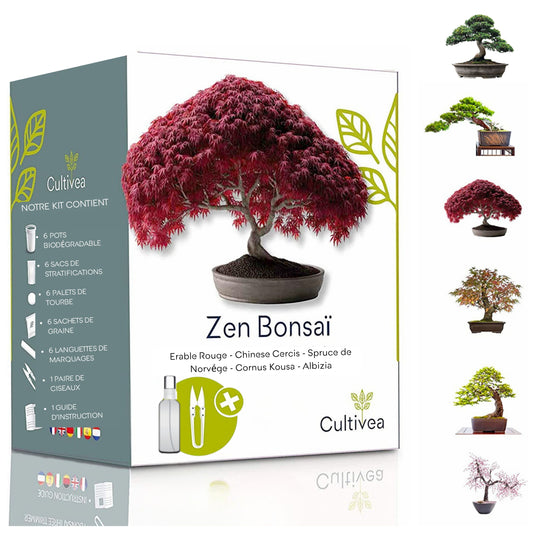
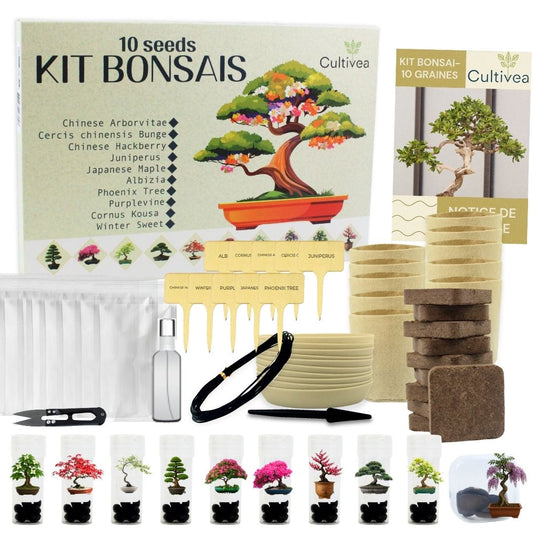
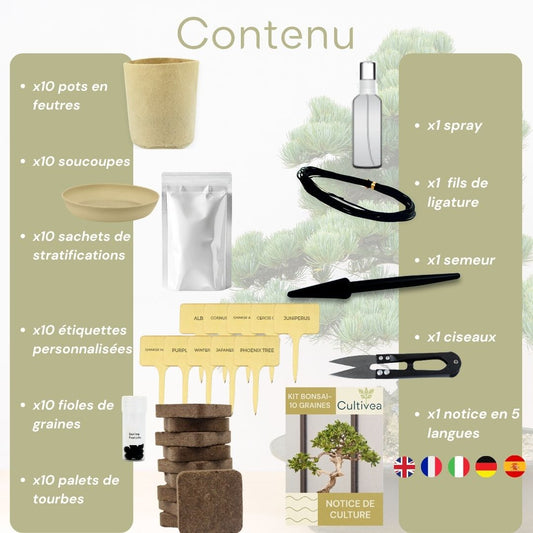
- Choose the right species: select a bonsai species that is suited to the conditions inside your home, especially if you have never grown a miniature tree before. For beginners, Cultivea offers the Premium Ready-to-Grow Bonsai Kit, which includes several essentials for getting started with bonsai cultivation.
- Maintain it regularly: a healthy bonsai requires suitable pruning, careful watering and periodic repotting depending on the species and its growth. A well-maintained tree will also look more harmonious than a weakened or neglected plant.
- Avoid busy passageways: place the bonsai in a stable position where it is unlikely to be knocked, repeatedly moved or exposed to strong draughts.
- Balance the elements: in Feng Shui, harmony is traditionally associated with balancing the five elements. Bonsai represents the wood element and can be combined with other elements to create a more balanced interior according to this philosophy.
If you would like to explore the philosophy and culture surrounding bonsai in more depth, discover its fascinating history. We also offer a guide to creating a Zen space at home with a bonsai, with ideas for integrating your miniature tree harmoniously into your interior.