
Leaf loss, dry branches, soil that is too dry or too wet... there are several signs that can warn you about the health of your bonsai tree. When your miniature tree seems to be slowly dying, it is not always easy to know how to react properly. However, a dying bonsai does not necessarily mean it is beyond saving. By adopting the right care routine, you can revive your bonsai. Cultivea explains what you should do to bring your miniature tree back to life.
Identify the cause of your bonsai tree declining
Most of the time, a bonsai tree does not die of old age, but because of improper care. The first thing to do when your tree starts deteriorating is to identify the cause of the problem.
Here are the main causes that can lead to a dying bonsai tree:
- Improper watering: too much water can cause root rot, while not enough water can dry the tree out.
- Poor placement: if your bonsai is exposed to too much sunlight or cold draughts, it may weaken over time.
- Too much or too little fertiliser: excessive fertiliser can burn the roots, while a lack of nutrients can seriously damage the bonsai.
- An unsuitable pot or compact soil: if the roots cannot breathe or drain properly, the bonsai will struggle to absorb water and nutrients.
- Pest attacks: aphids, spider mites and other pests may weaken the tree.
Once you identify the cause, you can apply the right treatment to save your bonsai tree. To learn more about bonsai care, discover our essential tips for growing a healthy bonsai at home.
What should you do if your bonsai is losing leaves?
If your bonsai tree is losing leaves, it is another warning sign. It means the tree is under stress and immediate action is needed to keep it alive.
Here is what to do depending on the symptoms:
- Leaves turn yellow before falling: this may be caused by overwatering. Check that the soil drains properly and reduce watering frequency.
- Leaves suddenly fall off: temperature shock may be the reason. Move your bonsai to a more stable environment protected from sudden temperature changes.
- Leaves curl up and become dry: low humidity is likely responsible. Mist the foliage regularly and ensure the tree is not exposed to overly dry air.
Discover the secrets to keeping a bonsai healthy and avoiding problems related to leaf loss.
How to save a dry bonsai tree?
Does your bonsai look dry and lifeless? Here are Cultivea’s tips to prevent it from dying:
- Check the branches and trunk: gently scratch the bark with your fingernail. If the layer underneath is green, there is still hope.
- Emergency watering: place the bonsai pot in a basin of room-temperature water for about 10 minutes to allow the roots to rehydrate properly.
- Create a humid environment: place a tray filled with clay pebbles and water underneath the pot to maintain proper humidity levels.
- Prune dead branches: remove completely dry parts so the tree can focus its energy on healthy growth.
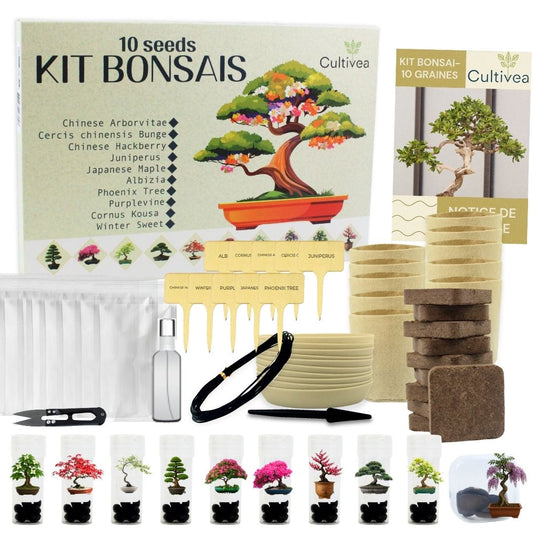
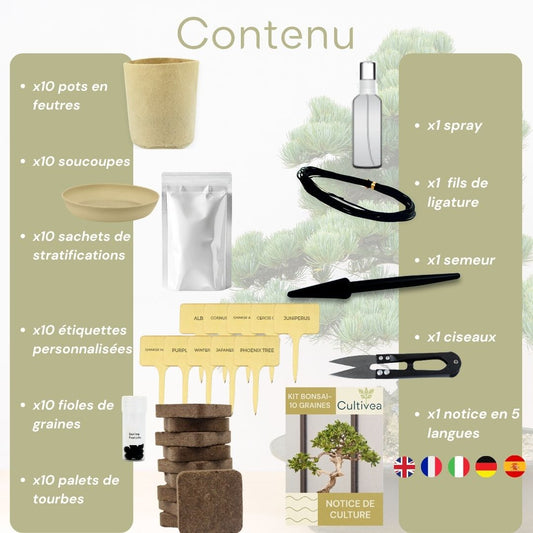
Caring for a bonsai is not always easy, especially if you are not naturally good with plants. However, bonsai growing is not reserved for experts. With the Cultivea Premium Bonsai Growing Kit, you have everything needed to start learning this ancient art.
What should you do if your bonsai is overwatered?
Too much water can also kill a bonsai tree. Excessive watering causes root rot, which can eventually lead to the tree dying.
To avoid the worst-case scenario, you should act quickly:
- Repot your bonsai: carefully remove the tree from its pot, remove the wet soil around the roots and trim any black or soft roots. Then repot the bonsai in well-draining soil.
- Reduce watering: if you have overwatered your bonsai, wait until the soil dries out before watering again. Overwatering is often fatal for bonsai trees.
- Improve drainage: bonsai trees need perfectly draining soil. We recommend using a bonsai-specific soil mix, ideally combined with akadama.
The ultimate remedy for saving a dying bonsai: repotting and fertilising
If your bonsai is in very poor condition, repotting may be the best solution:
- Repot it into a suitable pot that is neither too large nor too small, using well-draining soil.
- Use a gentle fertiliser (organic or slow-release fertiliser) to encourage new growth.
- Place your bonsai in a bright location without direct sunlight during its recovery phase.
Saving a dying bonsai tree requires patience and proper care, which is not always easy. Monitor watering, placement and soil conditions carefully to ensure healthy growth and a long life for your bonsai.