
Bonsai easily fascinates with its beauty and the philosophy behind its cultivation. However, as a thousand-year-old art, it should not be grown randomly. That said, anyone can start growing a bonsai by following the right practices. In this guide, we have gathered 10 essential tips to help you successfully grow a miniature tree at home.
Choose the Right Type of Bonsai
Growing a bonsai consists of cultivating a tree with a trunk in a pot. However, not all species are easy to grow in containers. For beginners, it is best to choose species that are well-suited to bonsai cultivation, especially leafy trees.
There are generally three main categories:
- Evergreen trees: Olive tree, Ficus
- Deciduous trees: Chinese Elm, Japanese Maple
- Conifers: Juniperus, Sequoia
The environment where your bonsai is placed also affects how easy it is to grow. If you plan to keep your plant indoors, Ficus or Olive trees are ideal indoor bonsai options. For outdoor pots, species such as pine or Sequoia are easier to cultivate.
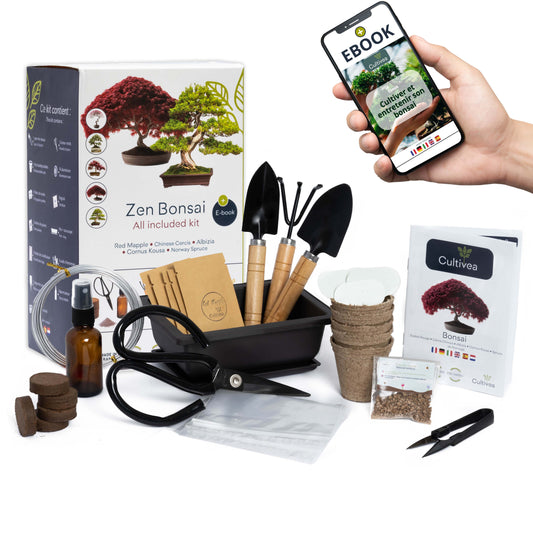
Struggling to find the right bonsai? Discover our Mini Zen Bonsai Kit, which include everything you need to get started: pots, seeds and tools.
Location: A Key Factor
Bonsai are highly decorative and can be placed almost anywhere in your home. However, the location has a direct impact on their growth.
In general, bonsai should be placed in a bright location. Avoid direct sunlight during the hottest hours of the day, especially for outdoor bonsai.
Proper Bonsai Watering
Watering is one of the most delicate aspects of bonsai care. Too much or too little water can be harmful to your miniature tree.
It is recommended to water your bonsai when the soil begins to dry out, but avoid waterlogging. Let the substrate dry slightly between waterings.
In winter, bonsai require less water, so pay attention to the specific needs of each species.
If you are looking for an easier alternative, you can also explore our Mini Wild Cacti Kit, which are decorative and require less maintenance.
Prune Regularly for a Harmonious Shape
Bonsai must be pruned regularly to maintain their aesthetic shape. It is essential to learn how to prune a bonsai correctly.
When pruning, you should:
- Remove dead or overly long branches
- Cut leaves that block light
- Encourage the growth of new shoots
To help you, we offer a set of 3 essential bonsai tools. These tools allow you to shape your tree and maintain its structure more easily.
Be careful not to remove branches that are important for light exposure.
Good to know: Repot your bonsai every 2 to 3 years to renew the substrate and trim the roots. This helps the tree continue to grow healthily.
Choose the Right Pot
Choosing the right pot is essential for your bonsai’s growth. The size of the container directly impacts its development.
A pot that is too large can lead to excess moisture, while a pot that is too small may restrict root growth.
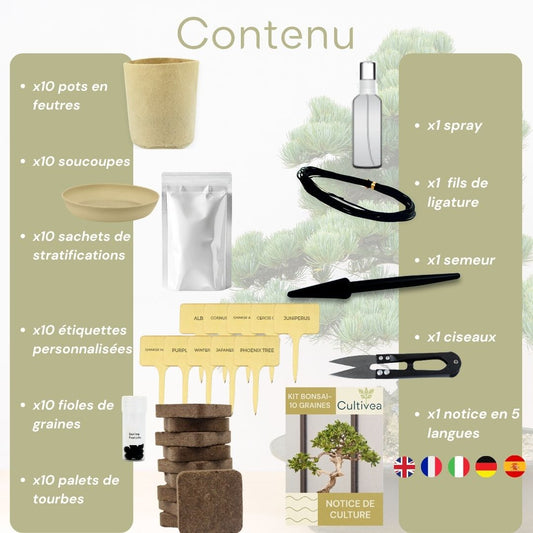
It is therefore important to select a pot that matches the size of your tree and provides proper drainage. Discover our set of 10 bonsai pots designed for this purpose.
Use Suitable Soil
Bonsai soil must be well-draining, meaning you should not use just any soil for your miniature tree.
It should be light and airy to allow roots to breathe and prevent rot.
Feed Your Bonsai Properly
Like any tree, bonsai need nutrients. Regular fertilisation is therefore essential.
Use suitable fertilisers, which you can find in our Premium Bonsai Kit. These kits include everything you need to nourish and care for your tree, along with practical advice for beginners.
💡 Good to know:
- Spring: start fertilising when the first leaves appear
- Summer: reduce fertiliser use
- Autumn: provide nutrients before dormancy
- Winter: the bonsai rests
Consider Humidity – An Important Factor
Indoor bonsai generally benefit from higher humidity levels. If the air is too dry, the plant’s health may suffer.
To maintain proper humidity:
- Use a spray bottle
- Place a tray with water and pebbles under the pot
However, avoid overwatering, as excess moisture can cause root rot. Also, avoid drafts, as they can lead to leaf loss.
Protect Your Bonsai from Diseases
Bonsai can be vulnerable to diseases and pests. Regularly inspect your tree for:
- Spots on leaves
- Insect presence
Outdoor bonsai are particularly exposed to these risks. To protect them, you can use fungicides and insecticides as a preventive measure.
Grow Your Bonsai with Passion
According to bonsai master John Yoshio Naka:
“Bonsai is not a race, nor a destination. It is an endless journey.”
You can grow your bonsai in different ways:
- Buying a bonsai (ideal for beginners)
- Growing from seeds (Misho): requires time but offers full control
- Growing from cuttings (Sashiki): faster than seeds
- Buying nursery plants
- Collecting from nature (Yamadori)
Whichever method you choose, the most important thing is to start with a quality miniature tree.
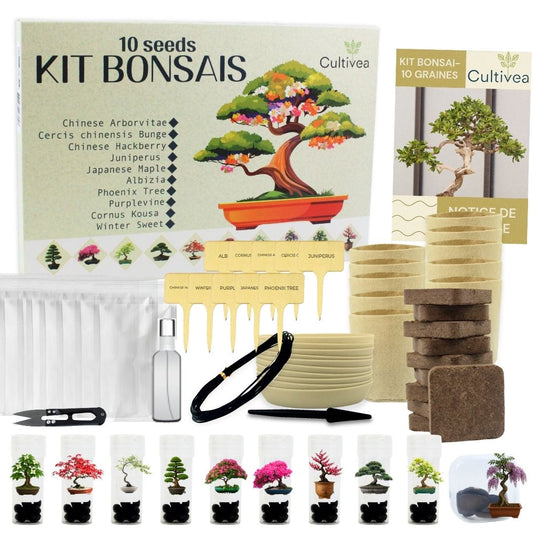
Discover our kits, perfect for beginners, including seeds, pots, suitable soil and easy-to-follow instructions.