
Thyme is an essential aromatic herb that can transform a wide range of dishes with its powerful fragrance. Its natural resilience and relatively easy cultivation also make it a good choice for beginner gardeners. You do not need a large garden to enjoy fresh thyme at home: it can grow successfully both in the ground and in a simple pot on a balcony or terrace.
Sowing thyme allows you to follow the plant's development from its very first shoots. Watching the tiny leaves gradually appear can be particularly rewarding. However, it takes a little patience before the plant becomes established enough for regular harvesting. So how do you sow thyme in a pot and give your seedlings the best possible start? Here are the essential steps for growing healthy, aromatic thyme plants.
When should you sow thyme?

Successful thyme sowing depends partly on choosing the right time. Like many Mediterranean herbs, thyme appreciates warmth and plenty of light.
Suitable periods for sowing thyme are generally:
- Between March and May, particularly for spring sowing
- Between August and September in areas with mild winters, provided the young plants have enough time to establish
Sowing thyme in winter is also possible indoors if you have a warm and, above all, very bright location. This allows you to start cultivation earlier in the year. Summer sowing can often be carried out outdoors, provided the growing medium does not dry out and the seedlings are protected from extreme heat. For beginners, sowing thyme indoors in early spring is often one of the easiest options.
What pot should you choose for sowing thyme?
Thyme does not need a huge amount of space, but it does require well-draining soil. Choosing the right pot and growing medium therefore plays an important role in successful thyme sowing.
For a good start, choose:
- A pot with drainage holes so excess water can escape
- A light and well-draining growing medium
- A bright position
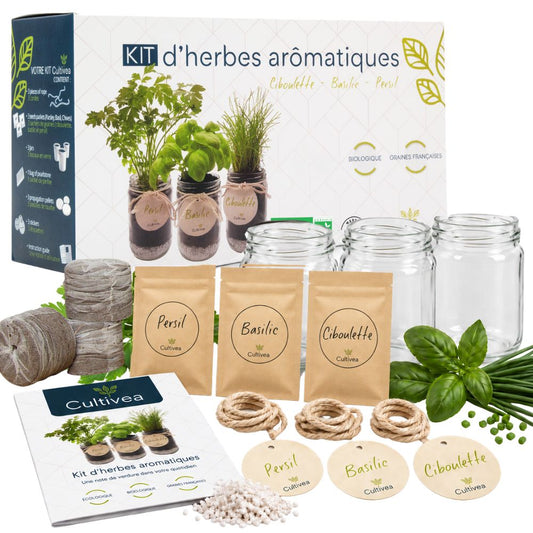
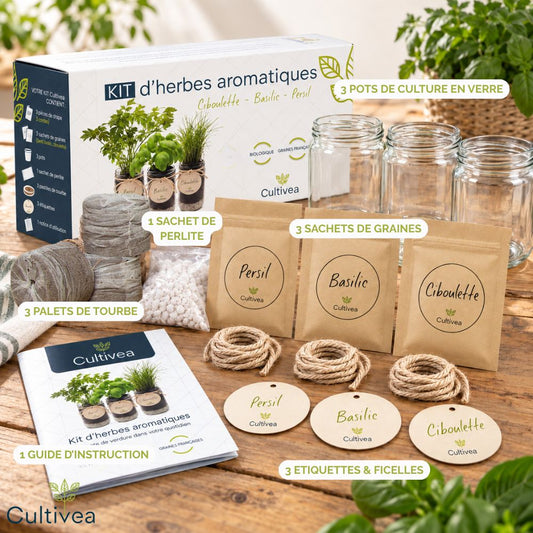
A pot around 15 to 20 cm in diameter provides plenty of space for a single thyme plant. If you want to grow several culinary herbs easily at home, the Red Aromatic Herb Kit allows you to sow several different plants. You can grow mint, coriander and thyme as part of the same gardening project and create a small supply of fresh herbs at home.
How to sow thyme in a pot step by step
Sowing thyme in a pot is relatively straightforward, but a few simple steps can improve germination. Start by filling your pot with a loose, light and well-draining growing medium. The soil should remain airy so that the young roots can develop properly.
Then proceed with sowing the thyme:
- Scatter the thyme seeds as evenly as possible over the surface of the growing medium
- Cover them only very lightly with soil, or simply press them gently onto the surface
- Moisten gently using a fine watering rose or spray bottle
- Place the pot in a bright, warm location
Thyme seeds are extremely small, so they should not be buried deeply. They benefit from remaining close to the surface and receiving light during germination.
Depending on the temperature, moisture levels and seed quality, germination often takes around 10 to 20 days, although it can sometimes take a little longer.
How to sow thyme successfully indoors
Sowing thyme indoors is particularly useful while outdoor temperatures are still cool. Place the pot near a very bright window so that the seedlings receive as much light as possible.
Thyme can also be grown indoors for a period, although it needs a very bright position and good air circulation. In the long term, it will often grow better outdoors on a sunny balcony, terrace or in the garden. You can find more advice in our guide on how to grow aromatic herbs indoors. Plenty of light, moderate watering and a well-draining growing medium are the main requirements.
Caring for thyme after sowing
Once the first seedlings appear, caring for thyme remains relatively simple. As a Mediterranean plant, thyme prefers a sunny position and, once established, copes well with relatively dry conditions.
To encourage healthy growth:
- Water when the top layer of the growing medium begins to dry out
- Keep the plant in a bright, preferably sunny position
- Avoid leaving water standing in the pot or saucer
Once established, thyme generally tolerates brief periods of dryness better than permanently wet soil. Young seedlings, however, should not be allowed to dry out completely.
Over time, the young plants will become stronger and produce more of the small aromatic leaves for which thyme is known.
When should you prune and harvest thyme?
Once your thyme plant has developed several strong shoots, you can begin harvesting small amounts. Regularly cutting the tips of established shoots can encourage branching and help the plant remain compact. Very young plants should initially be harvested only lightly.
Regular pruning also helps maintain a compact, vigorous plant, as explained in our guide on when to prune thyme.
During the growing season, thyme can be harvested repeatedly as required, depending on the size and vigour of the plant. Growth will slow considerably during the dormant period.
How can you use thyme after harvesting?
Thyme is an extremely versatile culinary herb. It pairs particularly well with vegetables, meat dishes, sauces, soups and Mediterranean recipes. Fresh or dried thyme is also commonly used to prepare herbal infusions. You can find a simple method in our guide on how to make a thyme infusion.
Just a few sprigs are usually enough to release thyme's characteristic intense fragrance.
Why sow thyme in a pot?

Growing thyme in a pot offers many advantages. It allows you to enjoy a fresh aromatic plant even when you only have a small amount of space available.
Thyme can grow particularly well:
- On a sunny balcony
- On a terrace
- Temporarily beside a very bright, sunny window
Easy to grow, relatively undemanding and highly useful in the kitchen, sowing thyme in a pot is a rewarding project for beginners. With a well-draining growing medium, plenty of light, careful watering and a little patience, just a few thyme seeds can develop into healthy and aromatic plants.