
Aromatic herbs are packed with fragrance and flavour. They enhance dishes, drinks and recipes with aromas that can be strong or subtle, fresh or musky, mild or spicy, while adding their own distinctive taste. Aromatic plants also offer interesting nutritional qualities, and many contain vitamins and minerals. Some herbs are traditionally associated with digestion, antioxidant activity, relaxation and other properties. To get to know them better, discover this list of aromatic herbs.

Garlic, an aromatic herbaceous plant
Garlic is an aromatic herbaceous plant that has been used in cooking for thousands of years. It comes in several forms and related varieties, including wild garlic.
Properties of garlic
Garlic contains a variety of naturally occurring compounds and is particularly known for its sulphur-containing components. It has long been valued both as a culinary ingredient and in traditional uses.
Using garlic in cooking
Garlic is one of the most common ingredients on any list of aromatic herbs and flavourings. The bulb is most often used to add flavour to savoury recipes. Wild garlic leaves can also be used in the kitchen.
Dill, an aromatic herb traditionally associated with digestion

Dill is an aromatic herb traditionally associated with western Asia and the eastern Mediterranean. It is recognised by its fine green foliage and can grow to around one metre tall. During summer, dill produces small yellow flowers arranged in characteristic umbels.
Properties of dill
Dill is traditionally associated with digestion and wellbeing. It also contains aromatic essential oils responsible for its distinctive fragrance and flavour.
Using dill in cooking
Dill has a distinctive flavour reminiscent of fennel and anise. Its leaves pair particularly well with fish, potatoes, cucumber and creamy sauces. Dill seeds can also be used whole or ground.
Basil, one of the most popular aromatic herbs
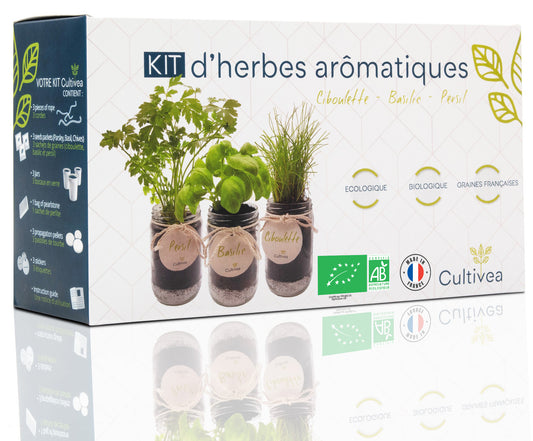
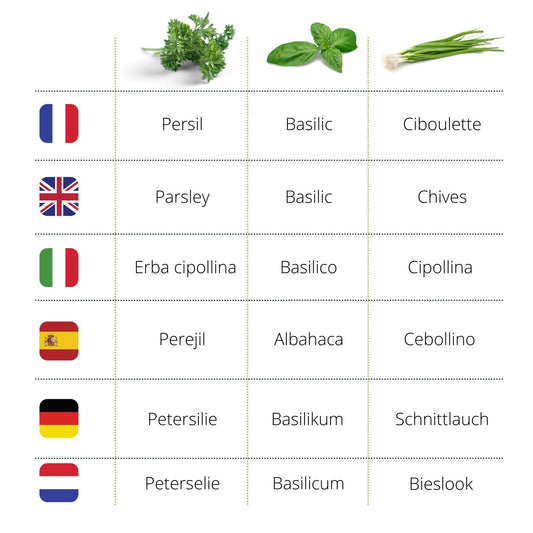
Basil is one of the most widely used plants on any list of aromatic herbs. This small herbaceous plant has fragrant green leaves and produces small flowers during the warmer months.
Properties of basil
Basil contains a range of plant compounds, vitamins and minerals. It is also traditionally associated with digestive wellbeing and is highly valued for its fresh aromatic qualities.
Using basil in cooking
Basil gives dishes a fresh and highly aromatic flavour. It can be used in many recipes, including salads, tomato dishes and pasta. It is also one of the essential ingredients in traditional pesto.
Chives, an aromatic herb with a delicate flavour

The list of aromatic herbs also includes chives. This perennial herb is easily recognised by its slender tubular leaves and attractive purple flowers.
Properties of chives
Chives contain a range of vitamins, minerals and naturally occurring plant compounds. They are particularly appreciated as a fresh herb that can be easily added to everyday meals.
Using chives in cooking
Chives have a fresh, subtle onion-like flavour. They work particularly well in starters and sauces made with yoghurt or soft cheese. Their leaves and edible flowers can also enhance omelettes, soups, salads and raw vegetables while adding a delicate aroma.
Coriander, a versatile aromatic herb
Coriander is another popular plant on this list of aromatic herbs. It has long been cultivated in Asia, the Middle East and the Mediterranean region and is relatively easy to grow under suitable conditions.
Properties of coriander
Coriander contains a variety of naturally occurring plant compounds. Its fresh leaves and dried seeds differ considerably in flavour and composition. It is also traditionally associated with digestion.
Using coriander in cooking
Coriander leaves give dishes their characteristic fresh aroma and are widely used in Asian, Indian, Middle Eastern and Latin American cooking. Coriander seeds can also be used as a spice and have a noticeably different flavour from the leaves.
Tarragon, an aromatic herb with a distinctive flavour
Tarragon is an aromatic plant traditionally associated with Central Asia. It generally prefers light, well-draining soil and warm, sunny growing conditions.
Properties of tarragon
Tarragon contains aromatic plant compounds and essential oils. It has traditionally been used in connection with digestion and is especially appreciated for its intense flavour.
Using tarragon in cooking
The young leaves and shoots of tarragon are used as a culinary herb. They have a distinctive, slightly aniseed-like flavour, so tarragon is best used in moderation. It is an important ingredient in Béarnaise sauce and also pairs particularly well with poultry, fish, eggs and sauces.
Bay, an aromatic plant with edible leaves
Bay, also known as bay laurel, is an evergreen shrub or small tree with aromatic leaves. It is important not to confuse bay laurel with oleander, which is a toxic plant.

Properties of bay
Bay belongs to the classic Mediterranean plants found on a list of aromatic herbs. Its leaves are intensely fragrant and are mainly valued for the flavour they bring to cooked dishes.
Using bay in cooking
Bay leaves are used to flavour sauces, soups, stocks and slow-cooked dishes. They are generally added during cooking and removed before serving.
Mint, an aromatic herb for desserts and drinks
Mint is an essential addition to a list of aromatic herbs for both sweet and savoury recipes. Its aroma can be found in countless dishes, drinks and other preparations. There are many different types of mint, including peppermint and spearmint.
Properties of mint
Mint contains aromatic essential oils whose composition varies according to the species. Peppermint, for example, is well known for its menthol content. Mint has traditionally been associated with freshness and digestive wellbeing.
Using mint in cooking
Mint is extremely versatile in the kitchen. It can be used to flavour summer drinks, teas and desserts. Its leaves are also excellent in salads, sauces and a wide range of savoury recipes.
Parsley, a delicious and versatile aromatic herb
Parsley is another essential herb on this list of aromatic herbs. Originally associated with the Mediterranean region, it can be grown in the vegetable garden or in pots. Both flat-leaf and curly varieties are widely cultivated.
Properties of parsley
Parsley contains vitamin C, vitamin K, carotenoids and other naturally occurring plant compounds. As with many fresh green herbs, its nutritional contribution depends on the quantity consumed.
Using parsley in cooking
Parsley is ideal for both flavouring and garnishing dishes. Its leaves can be added to meat, vegetables, soups, sauces and salads. Parsley is also a key ingredient in recipes such as tabbouleh.
Sage, a perennial aromatic herb
Sage is a perennial aromatic plant. Many varieties have slightly velvety leaves and produce flowers in a range of colours. Its powerful aroma pairs well with many different foods.

Properties of sage
Sage contains a range of essential oils and naturally occurring plant compounds. It has traditionally been associated with digestion and general wellbeing.
Using sage in cooking
Sage leaves can be used to flavour fish, meat and vegetable dishes as well as soups and stews. Sage pairs particularly well with butter and pasta and can also be used to prepare a herbal infusion.
Of course, this list of aromatic herbs is far from exhaustive. Many other aromatic plants can be grown in the garden, on a balcony or, depending on the species, on a windowsill. These include oregano, thyme, rosemary and savoury, as well as sorrel, lemon balm and many more.