
The Red Japanese Maple (Acer palmatum) is one of the most decorative plants you can grow at home. Its delicately cut foliage and vibrant colors make it a real standout on balconies, terraces and in Zen gardens. However, keeping its beautiful deep red color all year round can sometimes be challenging. You need to watch for color changes, leaves turning green, or stress caused by unsuitable exposure.
Don’t worry! Cultivea is here to help you understand how to care for your Red Japanese Maple and preserve its striking color throughout the seasons. In this article, discover the ideal growing conditions, common mistakes to avoid and practical tips for enjoying the beauty of this stunning bonsai all year round.
Why does a Red Japanese Maple change color?
First of all, it is important to understand why a Japanese Maple changes color. The beautiful shade of the Japanese Maple depends on several key factors.
-
The variety
Some varieties, such as Acer palmatum Atropurpureum or Bloodgood, naturally stay red for longer. Others turn green during summer before becoming red again in autumn. If you want a maple that stays red for as long as possible, choose varieties known for their stable pigmentation.
-
Light
The red pigments, known as anthocyanins, are strongly influenced by light. Too much shade can make the leaves greener, while excessive sunlight can also cause leaf scorch.
-
Nutrition
Soil that is too rich in nitrogen encourages greener foliage. In contrast, a light, slightly acidic substrate can help support the plant’s red coloration.
-
The seasons
Even the reddest varieties can change slightly depending on the weather, temperature and humidity. The goal is not to keep the color completely unchanged, but to provide the best possible conditions so the maple remains red for as long as possible.
What is the ideal exposure for keeping a Japanese Maple red?
Exposure is one of the most important factors for maintaining bright red foliage. Getting the light balance right is essential. The Red Maple bonsai is a perfect variety for enhancing an interior, but finding the right exposure indoors can also be challenging. Here is how to help your miniature tree maintain its vibrant red color.
Bright partial shade: the perfect balance
A Red Japanese Maple prefers a subtle balance:
- Gentle morning sun is highly beneficial.
- Light shade in the afternoon helps protect the foliage.
- A sheltered position away from strong winds is recommended.
Too much sunlight in summer can scorch the leaves, especially when the maple is grown in a pot. On the other hand, insufficient light may cause the foliage to turn greener or appear dull.
Direct sunlight?
It is possible, but only if:
- You live in an area with a mild, temperate climate.
- The plant remains properly hydrated.
- The sun is not too intense. Avoid full south-facing exposure during the hottest part of summer days.
Full shade
This should be avoided. Your maple may quickly turn greener, grow more slowly and lose much of its attractive red coloration.
What soil should you use for a Red Japanese Maple in a pot?
Choosing the right substrate is essential for both the health and appearance of your maple.
Ideal substrate composition
We have a guide on the best soil for growing a bonsai. More specifically, the following mixture can provide suitable growing conditions:
- 40% soil for acid-loving plants.
- 40% standard horticultural potting soil.
- 20% sand or perlite for effective drainage.
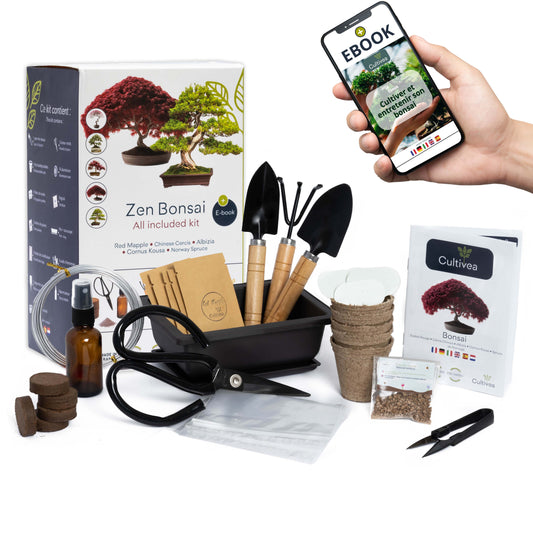
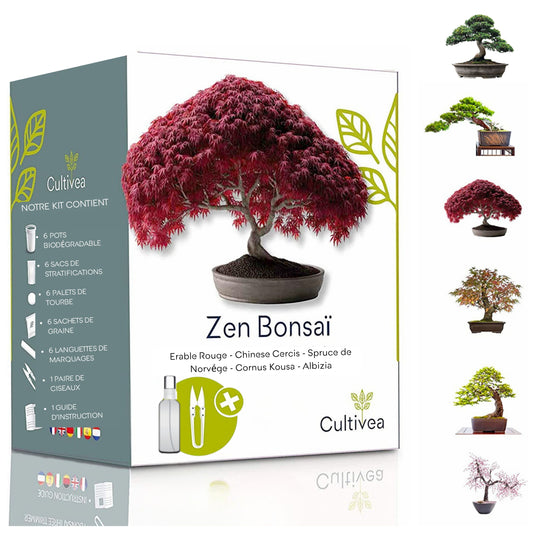
This mixture provides slightly acidic soil, around pH 5.5 to 6.5, while ensuring good drainage. Both are important for the health of your Japanese Maple. To make things easier, our Japanese Maple Bonsai Kit includes a suitable substrate to help your plant grow under the right conditions.
Golden rules for repotting
Repotting is important for the healthy growth of your maple:
- Repot approximately every 2 to 3 years.
- Spring is generally the best time.
- Use a pot slightly larger than the previous one, with excellent drainage.
- Be careful: if the roots become too restricted, the plant may produce smaller, paler leaves and growth can slow down.
Watering: how to avoid stress that can affect leaf color
Your Red Japanese Maple enjoys consistent moisture, but it does not tolerate standing water. Finding the right balance is essential, as water stress can affect both plant health and foliage color.
Good watering practices
- Water as soon as the surface of the substrate begins to dry.
- Use low-limescale water whenever possible. Rainwater is ideal.
- Never leave water sitting in the saucer under the pot.
- In summer: increase watering frequency during hot weather.
- In winter: reduce watering significantly.
Both overwatering and underwatering can cause stress and negatively affect the health and appearance of your Japanese Maple.
Nutrition: which fertilizer helps maintain red foliage?
Japanese Maples generally prefer relatively low-nutrient, slightly acidic soil. It is therefore important to choose fertilizer carefully.
The ideal fertilizer
- Avoid fertilizers that are excessively high in nitrogen (N), as they can encourage strong green foliage growth.
- Choose a fertilizer designed for acid-loving plants.
- A moderate nitrogen content combined with potassium (K) and trace elements is a good option.
- Application: depending on the product, light feeding between April and July is generally sufficient.
Controlled feeding can help your Japanese Maple remain healthy and support attractive foliage throughout the growing season.
How to keep a Red Japanese Maple healthy in a pot
Growing your maple in a pot, as with the kit we offer, differs in several ways from growing it directly in the ground.
Advantages of growing in a pot
- You have greater control over the soil and substrate.
- The plant can be moved easily, allowing you to adjust its exposure when needed.
Disadvantages to watch out for
- Greater risk of water stress because the substrate dries out more quickly.
- The pot can become excessively hot during summer.
- The roots can eventually become overcrowded.
Specific recommendations
- Choose a suitable pot with good drainage.
- Add a thin layer of mulch over the substrate to help retain moisture.
- Protect the plant from strong winds.
- Repot regularly to give the roots enough space.
- Adjust watering carefully according to the weather and season.
Conclusion
Keeping a Red Japanese Maple beautifully colored for as long as possible depends on a few essential principles: bright but gentle exposure, protection from harsh midday sun, slightly acidic and well-drained soil, carefully controlled watering and appropriate maintenance.
With the right care and a little attention, you can enjoy its vibrant foliage for a long time, bringing a sense of serenity and natural beauty to your space. With Cultivea’s tips and dedicated products, creating a colorful Zen corner at home has never been easier.