
The art of bonsai fascinates people all over the world today. For many enthusiasts, caring for a miniature tree is not simply a gardening activity: it is also a way to slow down, develop patience and build a closer connection with nature.
Its origins lie in China, where miniature landscapes were cultivated long before the practice was refined and developed in Japan. From there, bonsai gradually spread across the world. But where exactly did this art come from? How did it develop over the centuries, and what remarkable stories are associated with it? Discover the fascinating history of bonsai.
What is the art of bonsai?
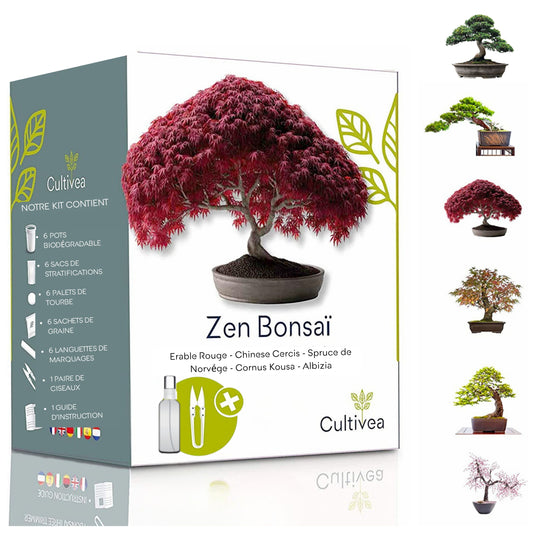
The art of bonsai combines horticulture, design and patience. It involves growing trees in containers and shaping them gradually through techniques such as pruning, repotting and wiring. Rooted in East Asian culture, bonsai encourages careful observation of natural forms and long-term care. If you would like to discover this fascinating practice for yourself, a Mini Zen Bonsai Kit can provide an accessible starting point.
Bonsai cultivation can be learned by beginners, although mastering its many subtleties may take years of practice. Each tree develops differently and is shaped through a particular combination of pruning, repotting, root care and, where appropriate, wiring. If you want to explore the fundamentals in more detail, our guide offers useful advice on how to master the basics of bonsai cultivation and care for miniature trees over the long term.
Where did bonsai originate?
The historical roots of bonsai can be traced back to ancient China. There, the tradition known as penjing developed, involving the creation of miniature landscapes using trees, rocks and other natural elements arranged in containers. This art existed long before the Japanese bonsai tradition took on its modern form. Rather than representing a single tree, penjing often evokes an entire landscape or an idealised natural world in miniature.
Through cultural exchanges between China and Japan, these forms of miniature landscape and tree cultivation gradually reached Japan. Over the centuries, Japanese practitioners refined the approach and increasingly focused on individual trees grown in containers. During the Japanese medieval period, this form of plant art became more established. It eventually developed into what is now internationally recognised as bonsai, with particular attention paid to proportion, balance, natural appearance and the impression of a mature tree in miniature.
Bonsai history and its fascinating stories
The centuries-long development of bonsai is associated with many stories and anecdotes. These help illustrate the cultural importance miniature trees acquired during different periods of Japanese history and their connection with notable people and major historical events.
Tokugawa Iemitsu and his interest in miniature trees
One well-known historical connection is with Tokugawa Iemitsu, the third shōgun of the Tokugawa shogunate in the 17th century. He is often associated with a strong interest in cultivating trees in containers. Among political and social elites of the period, carefully maintained miniature trees were more than decorative objects: they could also express refined taste, patience and an appreciation of natural forms.
The bonsai that survived Hiroshima
One of the most famous bonsai stories of the 20th century is linked to the atomic bombing of Hiroshima in 1945. A Japanese white pine bonsai belonging to the Yamaki family survived the explosion. The tree had been cared for by generations of the family and was later presented to the United States as a gift.
Today, this historic bonsai is preserved in the collection of the National Bonsai & Penjing Museum in Washington, D.C. Its story makes it an extraordinary witness both to the long tradition of bonsai and to one of the defining events of the 20th century.
What place does bonsai have in the modern world?
After developing for centuries in East Asia, bonsai became increasingly familiar in Europe and other parts of the world during the 19th century. International exhibitions and growing cultural exchange with Japan helped introduce miniature trees to a wider Western audience.
Major European exhibitions in the late 19th century, particularly those held in Paris, gave visitors opportunities to discover Japanese horticulture and decorative arts. Interest in bonsai gradually expanded, and during the 20th century more bonsai clubs, collections, exhibitions and specialist nurseries appeared around the world.
Today, bonsai is much more than a decorative trend. For many people, caring for a miniature tree combines gardening, creativity and long-term observation. Regularly tending a bonsai can encourage people to slow down, notice gradual changes and develop their horticultural skills over time.
How can you start practising the art of bonsai?
Would you like to explore the world of bonsai yourself? Today, this form of plant cultivation is accessible to beginners as well as experienced enthusiasts. To get started, you mainly need a suitable tree species, the right growing medium, an appropriate container and a few basic tools. On the Cultivea website, you can find a range of kits and bonsai tool cases designed for both newcomers and more experienced bonsai enthusiasts.
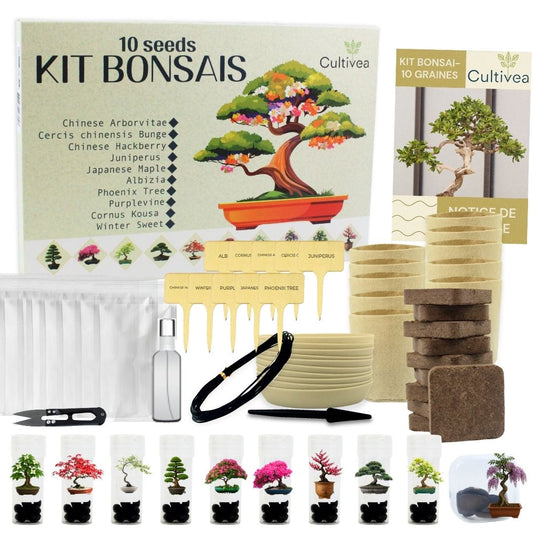
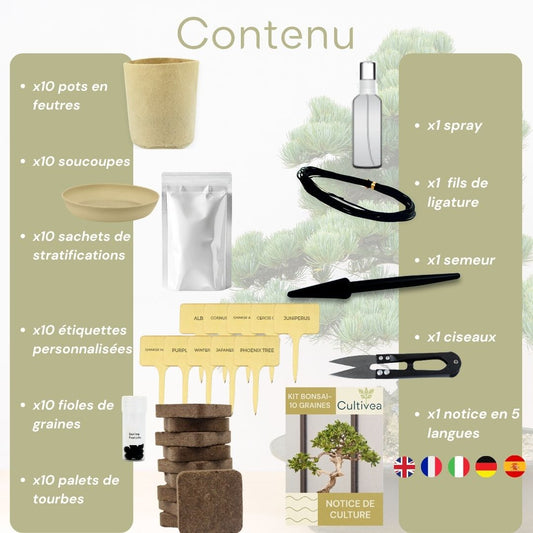
Depending on the set, a bonsai kit may include essentials such as seeds, pots, growing medium and instructions. Growing a bonsai yourself and caring for it over time allows you to follow the development of the tree from the beginning while learning about plant growth, pruning and shaping. A bonsai can also bring an unusual touch of nature to a balcony, terrace or suitable indoor setting, depending on the species.