
The Japanese maple is renowned for its beautiful leaves and spectacular autumn colours. When grown as a bonsai, this species becomes a true living work of art that appeals to lovers of miniature trees. But is it possible to grow a Japanese Maple bonsai from seed and cultivate it in a pot? In this article, we take a closer look at this distinctive bonsai with its colourful foliage.
Japanese Maple bonsai: beauty, patience and tradition
The Japanese Maple bonsai, or Japanese maple bonsai, is one of the most elegant types of bonsai. It is particularly appreciated for the way its foliage changes colour throughout the seasons. This seasonal transformation is one of the reasons why the Japanese maple is considered such an attractive tree for bonsai cultivation.

Growing a Japanese Maple bonsai from seed is possible
Contrary to what some people may think, it is possible to grow a Japanese maple from seed and eventually train it as a bonsai. The process is accessible even to gardening beginners, provided that you are patient and create suitable conditions for germination and early growth.
Japanese maple seeds do, however, have particular requirements that need to be considered. They typically undergo a period of cold stratification. This means reproducing winter-like conditions to help prepare the seeds for germination. In practice, the seeds are kept in cool conditions for several weeks before sowing.
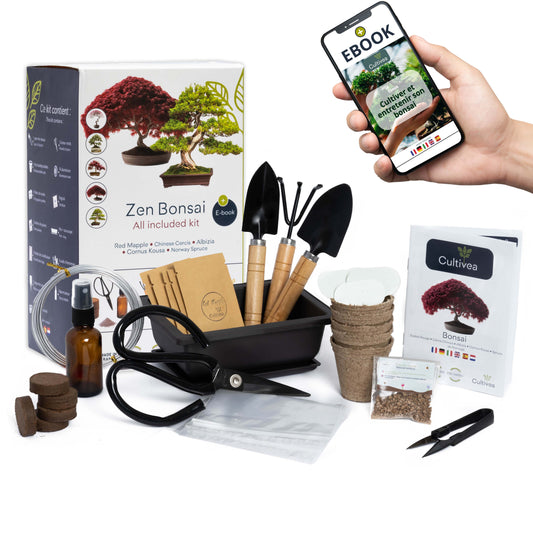
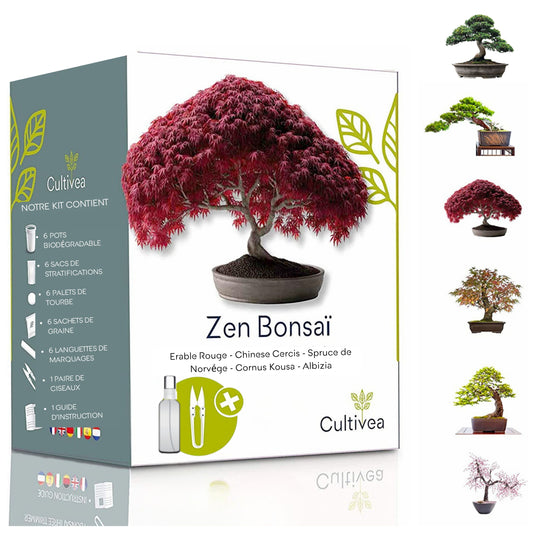
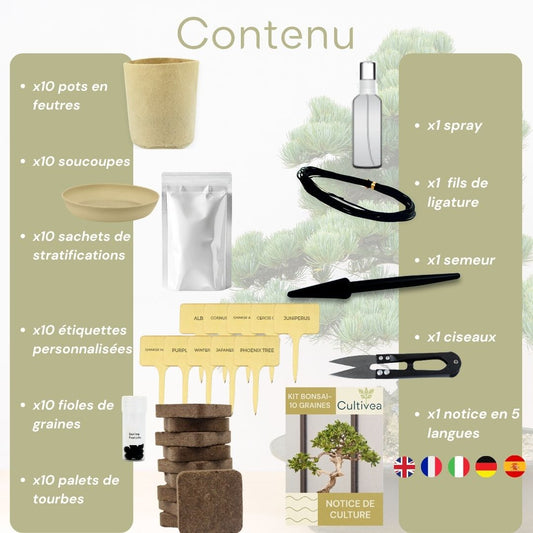
This extra step should not discourage you from growing your own Japanese maple. At Cultivea, the First Bonsai Japanese Maple Kit provides the equipment needed to get started, along with a step-by-step guide to accompany you from sowing through to the first pruning and shaping stages.
Steps for growing a Japanese Maple bonsai
- Seed stratification: keep the seeds cool at around 4–6°C, for example in a refrigerator, in a moist growing medium.
- Sowing: once the seeds are ready, sow them in a small pot filled with a well-draining growing medium.
- Germination: under suitable conditions, including gentle light and consistent moisture, the seeds can begin to germinate. Germination time may vary depending on the seeds and growing conditions.
- Growth: allow the young tree to grow freely for the first one or two years so that it can strengthen and develop.
- Training: once the trunk has thickened sufficiently, you can gradually begin shaping the bonsai through pruning, wiring and guiding the branches.
Creating a Japanese Maple bonsai: an accessible introduction to bonsai
As mentioned above, growing a Japanese maple bonsai is a project that beginners can also explore. It can provide an excellent introduction to the fascinating world of bonsai cultivation. Growing a bonsai means interacting closely with nature while learning to observe and appreciate the slow rhythm of a tree’s development.
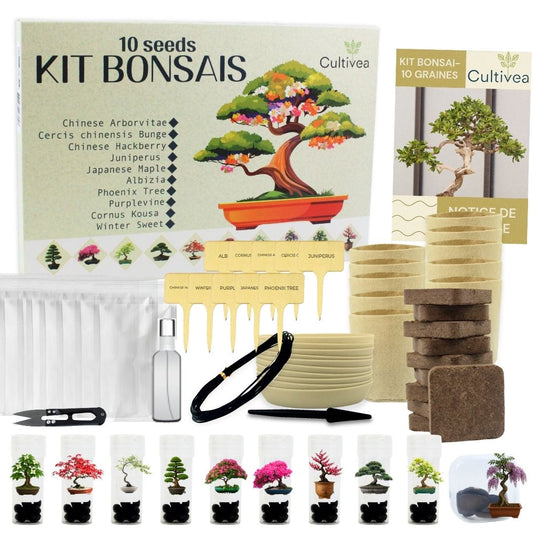
In addition to the Japanese Maple, our First Bonsai collection also includes the First Bonsai Cercis Chinensis Kit and the First Bonsai Chinese Elm Kit. These kits are designed to make your first steps into bonsai cultivation simpler and more accessible.
Japanese Maple bonsai care: essential tips
Caring for a Japanese maple bonsai follows many of the basic principles used for other bonsai species. Here are the main points to keep in mind:
- Light: Japanese maple enjoys plenty of light but should be protected from intense direct sunlight during hot summer periods. A bright position with some shade is generally ideal.
- Watering: the growing medium should remain slightly moist. Avoid both prolonged dryness and excess water.
- Growing medium: choose a well-draining bonsai substrate that allows excess water to escape.
- Fertiliser: suitable bonsai fertiliser can be applied during the growing season to support healthy development.
- Winter protection: Japanese maple is an outdoor tree and benefits from winter dormancy. However, when grown in a bonsai pot, its roots are more exposed to severe frost, so the container may require additional protection during very cold weather.
You will also need suitable equipment for regular bonsai maintenance. To learn more, read our article on the essential tools for caring for your bonsai.
How to prune a Japanese Maple bonsai
Pruning and shaping are essential parts of bonsai cultivation, and the Japanese Maple is no exception. These techniques help develop the tree's structure, maintain its balance and encourage attractive branching. Two main types of pruning can be used depending on the tree's stage of development:
- Structural pruning: this is used to establish the general shape and structure of the tree. More substantial pruning should be carried out at a time appropriate to the tree's condition and development.
- Maintenance pruning: during the growing season, new shoots can be shortened to control growth, encourage branching and maintain the desired silhouette.
Remember to use suitable, clean tools to avoid unnecessarily damaging the tree's tissues. If you are a beginner, you can also consult our practical guide to pruning and shaping a bonsai for additional advice.
How much does a Japanese Maple bonsai cost?
The price of a Japanese maple bonsai can vary according to its age, size and the quality of its training. For example, a young tree may cost around €30 to €60, while a larger, more mature and carefully trained specimen can cost several hundred euros.
Of course, when you grow your own tree from seed, the main appeal is the unique experience of watching and shaping it yourself from the very beginning rather than purchasing an already established bonsai. The First Bonsai Japanese Maple Kit provides an accessible introduction to this long-term project and can be an enjoyable way to discover the patient, mindful side of bonsai cultivation.