
The Chinese Elm is one of the most popular bonsai trees among both beginners and experienced enthusiasts. This species is particularly appreciated for its twisting trunk and small, serrated leaves, making it an attractive bonsai for both indoor and outdoor growing. To keep your miniature tree healthy, vigorous and elegant, however, proper care is essential. In this guide, discover how to care for your Chinese Elm bonsai and avoid the most common mistakes.
Why choose a Chinese Elm as a bonsai?
The Chinese Elm has several qualities that make it an excellent choice for a first bonsai:
- It is hardy and adapts well to different environments.
- It tolerates pruning well, even when carried out regularly.
- Its foliage is semi-evergreen: it may retain its leaves during winter when conditions are mild.
- Depending on the climate, it can be grown both indoors and outdoors.
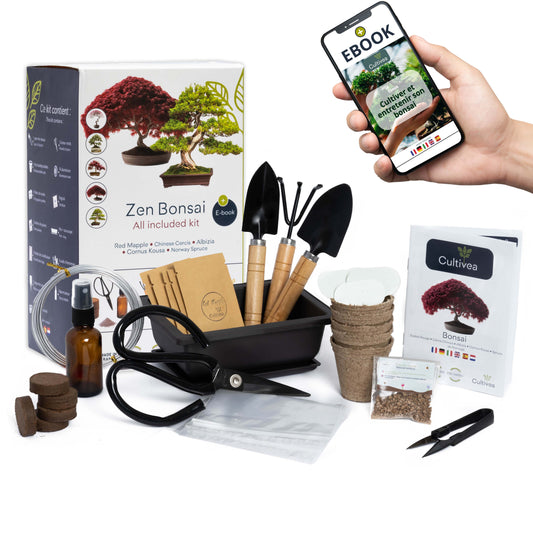
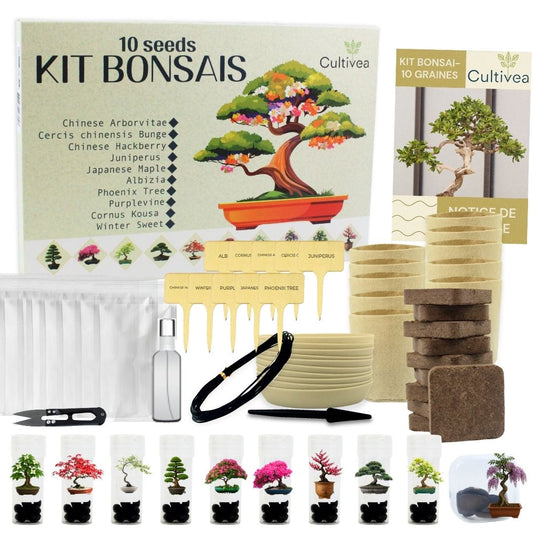
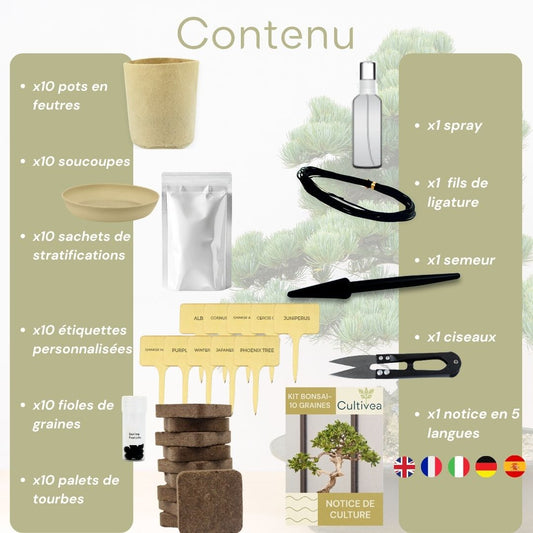
At Cultivea, our First Bonsai Chinese Elm Kit contains everything you need to get started easily, even if you are completely new to bonsai growing.

Chinese Elm bonsai: everyday care
A healthy Chinese Elm bonsai depends on a care routine suited to its needs. From watering and light exposure to the choice of substrate, every step matters when it comes to maintaining its vigour and attractive appearance. Here are the essential rules to follow.
Watering: finding the right balance
The Chinese Elm bonsai appreciates consistent moisture, but too much water can damage it. Finding the right balance is therefore essential. Here are a few useful guidelines:
- Water when the surface of the growing medium feels dry to the touch.
- Use room-temperature water, preferably with a low mineral content where possible.
- In summer, daily watering may be necessary. In winter, watering should be reduced but never completely stopped.
Tip: good drainage is particularly important for your bonsai. Cultivea kits include a growing medium suited to the roots of miniature trees and designed to encourage good root aeration. If you would like to learn more, read our guide on the best soil to use for a bonsai.
Light and location
- During summer, place your Chinese Elm outdoors while protecting it from intense, scorching sunlight.
- In winter, move it to a bright, protected location if temperatures fall below 5°C. Chinese Elms can tolerate low temperatures, but not prolonged frost.
- When grown indoors, choose a position near a south- or east-facing window and keep the bonsai away from direct heat sources.
Why are the leaves on my Chinese Elm bonsai turning yellow?
Even though the Chinese Elm is relatively easy to care for, its leaves can sometimes turn yellow. There are several possible causes:
- Overwatering: the roots can begin to rot, causing the leaves to turn yellow and eventually fall.
- Insufficient light: when grown indoors, a lack of natural light can cause the foliage to yellow.
- Lack of nutrients: insufficient nutrients can weaken the foliage.
Inspect your tree carefully and adjust your care routine accordingly. You can also read our dedicated guide to bonsai diseases and how to recognise them for more information about your tree's health.
Pruning and wiring: shaping your Chinese Elm
Chinese Elm bonsai trees respond very well to pruning. Here is how to proceed:
- Maintenance pruning: trim new shoots once they have developed 6 to 8 leaves, leaving 2 or 3 leaves on the shoot.
- Structural pruning: carry this out towards the end of winter to reshape the overall structure of the tree.
- Wiring with aluminium wire can be used to guide and shape the branches, but the wire should be checked regularly to ensure that it does not cut into the bark.
The Cultivea kit includes pruning tools to help you get started safely.
Chinese Elm bonsai in winter: what should you watch out for?
Winter is a period of much slower growth for bonsai trees, so their care routine should be adjusted accordingly. Here are the main steps to follow:
- If you leave your bonsai outdoors, protect it from frost with suitable winter fleece.
- If you bring it indoors, keep it away from draughts and provide as much natural light as possible.
- Reduce watering, but never allow the growing medium to dry out completely.
Proper winter care is important for helping your Chinese Elm bonsai through the colder months and encouraging healthy new growth when spring arrives.
The Chinese Elm: an ideal bonsai for developing your skills
Choosing a Chinese Elm bonsai means choosing an elegant, hardy and relatively easy-to-care-for tree. It is also an excellent way to learn more about bonsai growth and maintenance. Observe your tree's needs and adapt your care accordingly. Over time, you will develop your bonsai-growing skills while enjoying the satisfaction of watching your tree evolve. Cultivea supports you throughout the process with kits containing everything you need to get started, even if you are a complete beginner.