
Albizia, with its delicate feathery foliage and flowers that resemble small pink silk pom-poms, has a distinctive charm. Grown as a bonsai, it becomes an elegant miniature tree that can bring an exotic and poetic touch to a balcony, terrace or garden.
One of its most fascinating features is the movement of its foliage: the leaflets can fold together in the evening and open again with daylight. Whether you are already passionate about bonsai or simply curious to try growing one, Albizia is an interesting species whose development is rewarding to observe. In this article, discover our practical advice on growing, caring for, pruning and encouraging your silk tree bonsai to flourish.
What is Albizia, also known as the silk tree?

Albizia julibrissin, commonly known as the silk tree, is a deciduous tree native to Asia. It is appreciated for its fine, divided foliage, which resembles that of mimosa. Its leaflets can fold together at night, creating an interesting natural display.
When grown as a bonsai, Albizia retains many of its attractive characteristics:
-
An elegant growth habit;
-
Light, finely divided foliage;
-
Spectacular flowers on sufficiently mature specimens;
-
Relatively vigorous growth that offers plenty of opportunities for training.
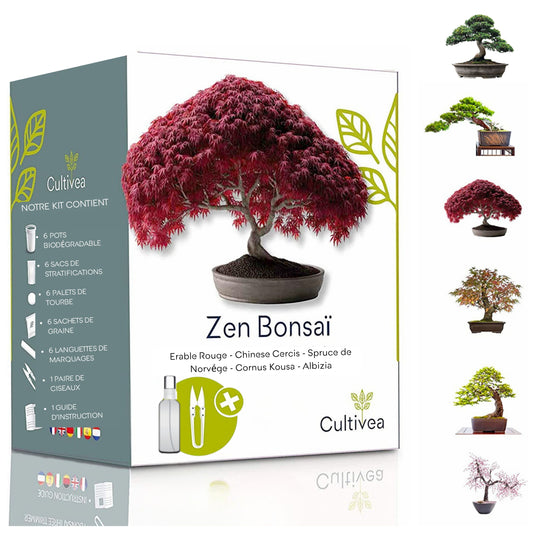
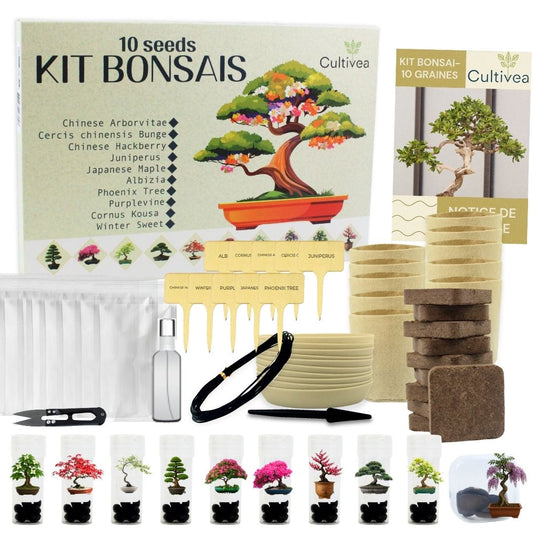
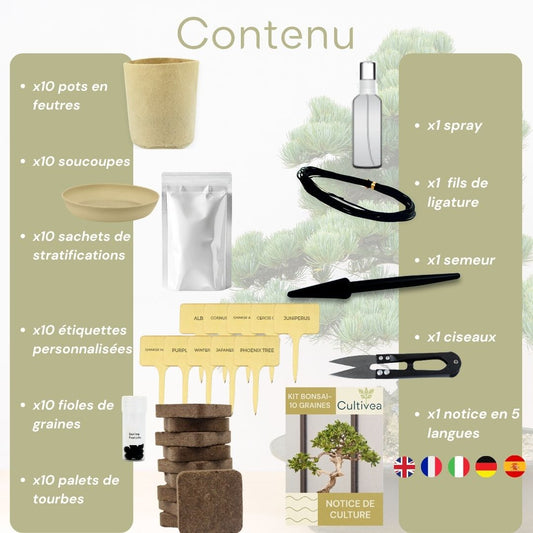
This makes it an appealing choice for anyone who wants to discover bonsai through an expressive and unusual tree. Albizia is also included in our new 10 Bonsai Growing Kit with Accessories if you would like to start your own collection.
Albizia silk tree: vigorous and interesting growth
One of the pleasures of growing Albizia is its relatively vigorous growth, particularly when the tree is young and receives plenty of warmth and light. This makes it possible to observe noticeable changes during the growing season and offers several advantages when training it as a bonsai:
-
Developing the trunk: with good growing conditions, the trunk can gradually become thicker and more characterful.
-
Building the branch structure: new shoots can be selected and trained to create the future shape of the tree.
-
Watching it evolve: during active growth, you can observe visible changes from one month to the next.
Growing Albizia in a pot also makes it easier to manage its roots, growth and overall shape. However, keeping a tree in a small container is not enough on its own to create a healthy bonsai. Regular repotting, appropriate pruning, suitable substrate and balanced care are all essential for maintaining a well-proportioned tree.
Silk tree in a pot or as a bonsai: what conditions does it need?
The silk tree loves light and warmth. During the growing season, an Albizia bonsai generally benefits from being kept outdoors rather than permanently indoors. Choosing the right position is essential for healthy growth.
-
Plenty of sunlight: Albizia appreciates a bright, sunny position. In regions with particularly intense summer heat, some light shade during the hottest part of the day can be helpful, especially for young or recently repotted trees.
-
A sheltered position: its delicate foliage and young shoots benefit from protection against cold winds and extreme weather.
-
Outdoor growing during the warmer months: once the risk of damaging frost has passed, place your Albizia on a balcony, terrace or in the garden so that it can benefit from natural light and fresh air.
Although it can occasionally be brought indoors for decorative purposes, Albizia will generally remain healthier if it spends most of the growing season outside.
Silk tree care: the essential basics
Caring for an Albizia bonsai is manageable even for beginners, provided that a few basic requirements are respected. The most important factors are plenty of light, controlled watering and a well-draining substrate.
Watering: finding the right balance
Albizia needs regular watering while actively growing but does not tolerate roots that remain permanently waterlogged.
-
Keep the growing medium evenly and lightly moist during spring and summer without leaving it constantly saturated.
-
During its dormant period, when the tree has lost its leaves, its water requirements are lower, so watering should be reduced accordingly.
-
A useful habit: never leave water standing permanently in the saucer, as this can contribute to root problems.
A well-draining substrate for healthy roots
A bonsai needs a loose growing medium that drains excess water efficiently while retaining enough moisture for the roots. The substrates included in our kits, such as the Zen Bonsai Kit, are designed for the early cultivation and development of young bonsai.
Pruning: shaping your miniature tree
Pruning is one of the most creative parts of bonsai cultivation. During the growing season, overly long shoots can be shortened to help develop the desired branch structure and maintain the tree's silhouette. More substantial pruning should always take the tree's age and condition into account.
A useful tip: young branches can be relatively flexible but are not impossible to break. If you use bonsai wire to position them, work carefully and check regularly that the wire is not cutting into the rapidly thickening bark. For further advice, consult our complete guide to pruning and shaping a bonsai.
Silk tree flowering: a spectacular moment
The flowers of Albizia julibrissin are among its most distinctive features. During summer, sufficiently mature and healthy trees can produce pink to reddish flowers made up of numerous fine stamens, giving them the appearance of delicate silk brushes. This is where the name “silk tree” comes from.
Flowering is not guaranteed on a bonsai, however. Young trees need time to mature, and frequent or heavy pruning can also delay flower production. To create favourable conditions, keep these three factors in mind:
-
Plenty of light: good light levels support vigorous growth and can help create suitable conditions for flowering.
-
Patience: a tree grown from seed needs to reach sufficient maturity before it is likely to bloom.
-
Regular care: appropriate watering, feeding and healthy root development help maintain the overall vigour of the tree.
Flowering may be less abundant on a highly miniaturised specimen than on a full-sized silk tree. That makes the appearance of the characteristic flowers on a mature Albizia bonsai especially rewarding.
Albizia: much more than an ordinary bonsai

Growing an Albizia bonsai allows you to follow the development of a particularly expressive tree from close range. One of its most fascinating characteristics is the movement of its foliage: the delicate leaflets can gradually fold together in the evening and reopen when light conditions are suitable. You can also discover this species in our Premium Bonsai Kit.
The silk tree may be particularly appealing if:
-
You are new to bonsai and want a species whose development can be clearly observed during the growing season.
-
You are looking for an elegant and distinctive bonsai that stands apart visually from many more traditional species.
-
You want to grow an unusual tree with delicate foliage and striking flowers.
With plenty of light, appropriate watering, a well-draining substrate and a little patience, Albizia can develop into a highly decorative bonsai. For anyone who enjoys observing a tree over the years and gradually shaping it, the silk tree makes a fascinating long-term bonsai project.