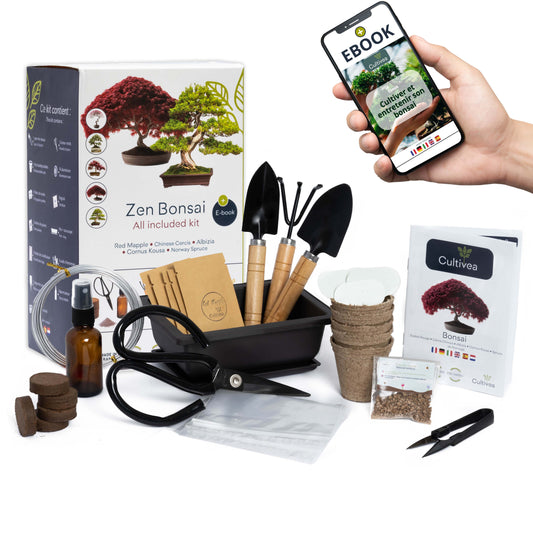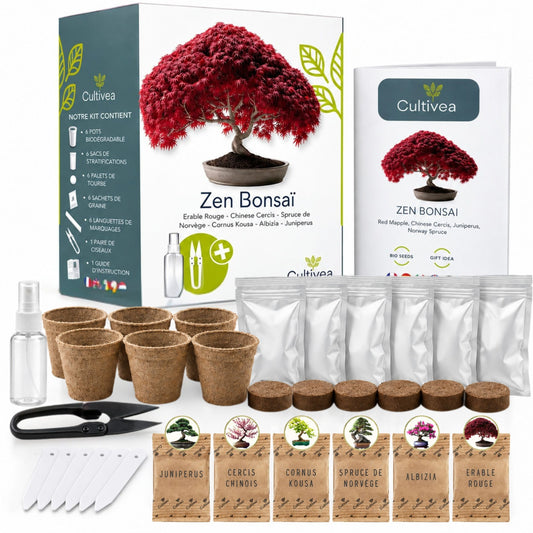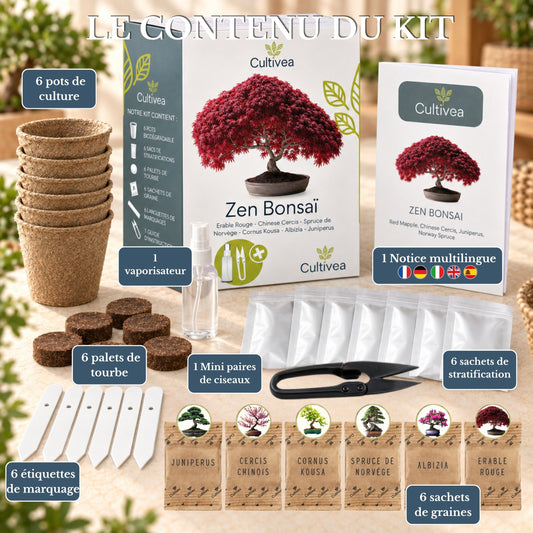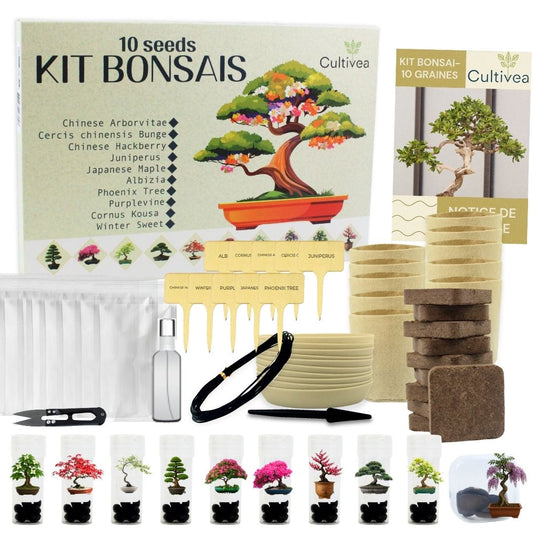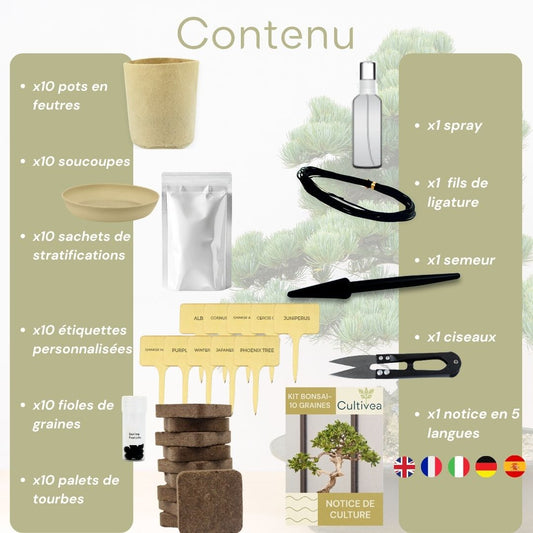

A bonsai is a miniature tree that can be grown indoors or outdoors depending on the species. It can make an attractive feature in a living space, conservatory, terrace or balcony. Growing and caring for a bonsai requires patience, consistency and the right techniques. If you would like to grow beautiful miniature trees at home, discover how to grow a bonsai successfully.
Choosing the right bonsai seeds
Bonsai cultivation is an art that involves growing and shaping a tree in miniature form. To get started successfully, it is important to choose suitable bonsai seeds and then shape the developing tree using techniques such as pruning and wiring.

Which bonsai species should you choose?
Many different tree species can be cultivated as bonsai. To grow a bonsai from seed, choose a species suited to your local climate and growing conditions. Your choice will depend in particular on whether the tree will be kept indoors or outdoors and on the requirements of the species, including container growing, pruning, winter dormancy and stratification.
For year-round indoor cultivation, tropical and subtropical species are generally the most suitable, including Ficus, Carmona and Serissa. Temperate species such as maple (Acer), pine (Pinus) and juniper (Juniperus) usually need natural seasonal changes and are generally best grown outdoors. The most suitable conditions for elm species can also vary according to the exact species and local climate.
Where can you find bonsai seeds?
Bonsai seeds are relatively easy to find. You can, for example, collect seeds from suitable trees growing locally, such as acorns or chestnuts in autumn, provided that collecting them is permitted in the area. Alternatively, you can find seeds from a wide range of bonsai-suitable tree species from specialist retailers.
Good to know: The seeds of many conifers are found inside cones. Mature cones may open under warm, dry and suitable conditions, releasing the seeds held between their scales.
When should you sow bonsai seeds?
The best time to sow bonsai seeds depends mainly on the tree species. For many temperate species, autumn can be a suitable time because the seeds are naturally exposed to cold winter conditions before germinating in spring. Depending on the species, this can reduce or remove the need for artificial stratification.
It is also possible to sow bonsai seeds in spring. Seeds that require a period of cold before germination may first need to be stratified. For sowing, use a small container filled with a loose, well-draining growing medium that allows excess water to escape while maintaining good aeration.
Now that you know which seeds to choose and when to sow them, let us look at how to grow a bonsai from seed.
How to plant bonsai seeds

Planting bonsai seeds is generally straightforward once you understand the requirements of your chosen tree species. The exact method will vary depending on the species and the time of year. As a general guide:
- If appropriate, place a coarse, well-draining layer such as suitable mineral material at the bottom of the container.
- Add a loose growing medium suitable for seed sowing.
- Place the seeds in or on the growing medium, leaving sufficient space between them.
- Cover the seeds with an appropriate layer of growing medium according to the requirements of the species.
- Press the growing medium down gently without compacting it too firmly.
- Water carefully and keep the growing medium evenly slightly moist afterwards, while avoiding waterlogging.
Some tree species require stratification before the seeds are sown. This involves keeping the seeds under specific temperature and moisture conditions for a certain period to help overcome natural dormancy. Whether stratification is necessary, and how long it should last, depends on the species. Seeds from temperate trees may particularly require a cold period when they have not been exposed naturally to winter conditions through autumn sowing.
You now know how to sow bonsai seeds and begin growing a young bonsai. The next step is to learn how to care for and maintain your bonsai as it develops.