
Poppies are among the wildflowers that fascinate with their bright red petals gently moving in the wind. This flower is also rich in symbolism, evoking freedom, nature and art. Beyond its poetic charm, the poppy is also very easy to grow in the garden or on a balcony. You simply need to sow it at the right time to transform your outdoor space into a colorful field of flowers. So, when should you sow poppies for abundant blooms? Cultivea gives you the answer in this guide.
Why grow poppies at home?
Growing poppies at home offers many advantages. Before looking at the best time to sow them, here are a few reasons why poppies are so popular:
- Easy to grow: they thrive even in poor soil and require very little maintenance.
- Ornamental: they attract bees, add color to gardens and enhance flower beds.
- Edible and useful: depending on the variety, petals and seeds can be used in infusions, cooking or cosmetics.
- Rich in meaning: poppies symbolize remembrance, rest and, in some cultures, resilience.
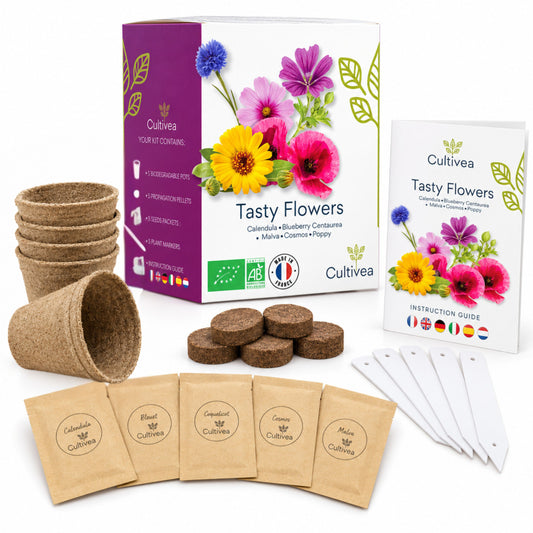
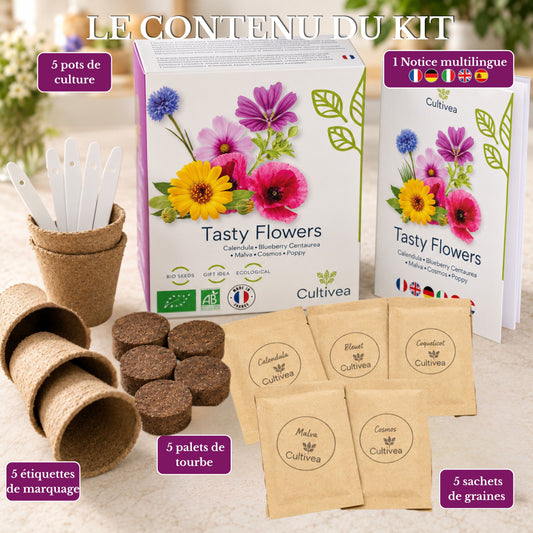
In our Cultivea Organic Edible Flowers Kit, you will find poppy seeds combined with other useful and flavorful varieties, ideal for adding color and variety to your everyday life.
When to sow poppies: choosing the right time for abundant flowering
The best time to sow poppies depends mainly on the climate, but also on the flowering period you want to achieve.
Spring sowing (March to May)
Spring is one of the best times to enjoy a beautiful display of poppies. Sowing during this season generally results in flowering from June to September, depending on the climate. You can sow the seeds directly in the ground or in pots once the risk of frost has passed. This is also a good option for regions with cold winters.
Autumn sowing (September to November)
In areas with a mild climate, sowing in autumn can lead to earlier flowering the following spring. The seeds remain dormant during winter and begin to germinate as soon as temperatures become milder.
How to sow poppy seeds?
Poppy seeds are extremely fine, almost like dust. Here are a few tips to help you sow them successfully:
- Prepare the soil: it should be light, well drained and not overly fertilized. Poppies prefer relatively poor soil.
- Broadcast the seeds: spread them over the surface without burying them. They need light to germinate.
- Gently press the surface down with a board or your hands.
- Water with a fine spray until germination, which usually takes 7 to 14 days depending on conditions.
- Thin out the seedlings if necessary, leaving around 10 to 15 cm between plants.
Cultivea tip: To make planting easier and enjoy a varied mix, try our Edible Flowers Kit. It contains everything you need: seeds, soil, biodegradable pots and a step-by-step growing guide.
How long does it take for a poppy to grow?
Poppies are among the flowers that germinate relatively quickly after sowing, usually within around 7 to 14 days. Flowering generally occurs 60 to 90 days after germination, depending on the climate. So, if you sow your seeds in April, for example, you can expect the first flowers to appear around late June or early July.
Benefits of poppies
Beyond their beauty, poppies have several traditional uses:
- Soothing: the petals are traditionally used in herbal infusions.
- Traditionally relaxing: common poppy has long been used in herbal preparations associated with relaxation.
- Edible: the petals can be used to decorate salads and desserts. Seeds from certain species, such as Papaver somniferum, are also commonly used in baking.
Please note: it is important to distinguish edible poppy varieties such as common poppy (Papaver rhoeas) from ornamental varieties that are not intended for consumption. In our kit, we only include varieties intended for suitable culinary use.
Poppies in art and nature
It is difficult to talk about this flower without mentioning Monet's famous poppies. In one of his best-known works, the artist depicts a field filled with bright red poppies, with people walking through the landscape. As mentioned at the beginning of this article, poppies are often associated with natural beauty and freedom. A similar symbolism can be found in this Impressionist painting. The flowers reflect the joy and tranquility of the French countryside. Their vivid colors contrast with the green fields and blue sky, creating a lively and dynamic scene while preserving the simplicity that gives the artwork its charm.
Pair poppies with other edible flowers
Poppies pair beautifully with other edible flowers featuring bright colors and mild or slightly floral flavors, such as:
- Calendula: its yellow-orange petals add color and a delicate touch to salads and infusions.
- Cornflower: known for its intense blue color, it is also popular for decorating desserts and making herbal teas.
- Mallow: its delicate flowers are rich in mucilage and are perfect for adding an elegant decorative touch to dishes.
- Cosmos: with its very subtle flavor, it is often used as an edible decorative flower in creative cuisine.
Our Cultivea Edible Flowers Kit brings these varieties together in one all-in-one solution. It is ideal for creating a colorful, useful and flavorful little growing space, even without a garden. For food lovers looking for inspiration, we also offer a recipe for coconut tart with edible flowers on our website.