
Bright red, delicate and almost fragile, the common poppy immediately catches the eye. It grows in fields and along roadsides and is often associated with wild, natural landscapes. But one question comes up regularly: can you eat common poppies safely? Certain parts of Papaver rhoeas have traditionally been used, but a few precautions are essential. Behind its striking appearance lies a plant with a long history of culinary and traditional herbal use.
An edible flower – but one that requires care
The common poppy, whose scientific name is Papaver rhoeas, has been known and used for generations. Its petals have traditionally been consumed in small quantities, although not every part of the plant is used in the same way.
The petals are the part most commonly used. They are appreciated for their delicate texture and very mild flavour. However, it is essential to distinguish the common poppy from other species of poppy, as different species can contain different compounds and may not be suitable for consumption. The plant should therefore be identified with certainty before it is eaten.
How can you use common poppy petals?
Common poppy is not used like a typical culinary herb. Its petals are generally added in small quantities to bring colour and a delicate floral note to recipes. They can be used in several ways:
- As a decoration for salads or desserts
- Infused in hot water to prepare a mild herbal infusion
- Made into syrup, one of the more traditional preparations
Common poppy syrup is one of its best-known culinary uses. It has a mild, slightly floral flavour that can be used to add an original touch to drinks and desserts.
A plant traditionally associated with relaxation
Beyond its culinary uses, common poppy also has a history in traditional herbal practices. Its petals have sometimes been used in mild infusions traditionally associated with relaxation and rest.
These traditional uses should not be confused with proven medical effects. Anyone considering using common poppy specifically for health-related purposes should seek advice from an appropriate healthcare professional.
Can you eat common poppy every day?
Even though common poppy petals have traditionally been consumed, they should be used sparingly rather than eaten freely every day. Like many plants, common poppy contains naturally occurring active compounds whose concentrations may vary.
Extra caution is appropriate for young children, pregnant or breastfeeding women, and anyone taking medication or living with a medical condition. If you are unsure about the plant's identification or whether it is suitable for you, it is best to seek professional advice before consuming it.
Grow your own edible flowers
If you want to use edible flowers in your cooking, growing them yourself is one of the best ways to control their origin. It also helps you avoid picking flowers from roadsides or other areas that may have been exposed to pesticides, pollution or other contaminants.
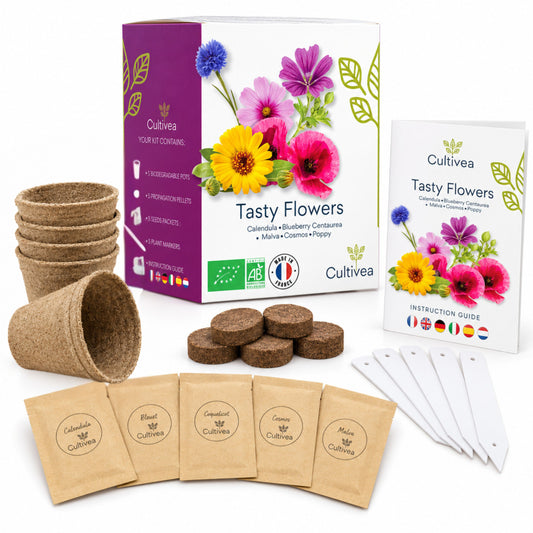
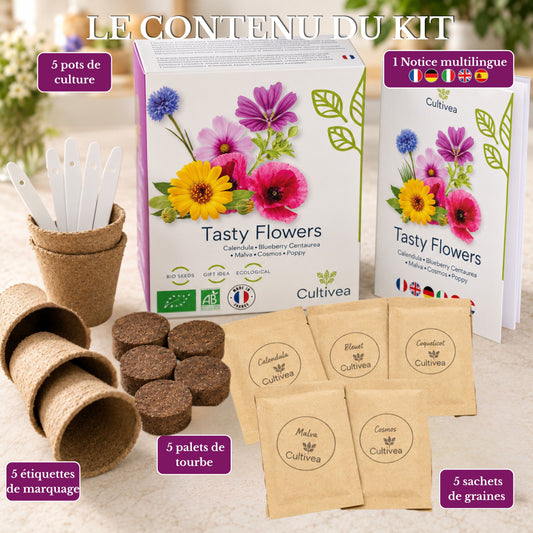
With the Organic Edible Flowers Mini Kit, you can easily start growing flowers at home. The kit is designed to make each stage accessible, even for beginners, with suitable seeds, growing materials and guidance to help you get started. It is a simple way to discover edible flowers while having greater control over how they are grown.
Creative ways to use edible flowers in cooking
Edible flowers, including common poppy petals, can bring a new dimension to your dishes. They are not limited to decoration: colour, texture and delicate flavours can all contribute to the overall culinary experience.
A simple dish can quickly look more refined with just a few carefully placed petals. A salad becomes more colourful, a dessert more elegant and even a drink can take on an entirely different appearance. These may be small details, but their visual impact can be immediate.
With its vivid red colour, the common poppy naturally draws the eye. Its petals can make dishes feel brighter and more expressive, offering an easy way to bring a creative touch to everyday cooking.
Beyond appearance, incorporating edible flowers into recipes encourages experimentation. You can explore new combinations, try different presentations and pay more attention to the finishing touches. Discover more ideas in our guide to using edible flowers in your dishes, with inspiration that can easily be adapted to everyday cooking.
A flower rooted in nature and tradition
The common poppy holds a special place in the collective imagination. It represents both wild, spontaneous nature and a certain sense of delicacy and poetry. A field dotted with red poppies immediately evokes peaceful, natural landscapes.
The flower also appears in a variety of traditions, including cooking and traditional herbal practices. Its petals have historically been used in different preparations and appreciated for their vivid colour. These long-standing uses show how deeply the plant is rooted in European cultural history.
This combination of beauty and traditional usefulness makes the common poppy particularly fascinating. It is more than simply an ornamental wildflower and can encourage us to look more closely at the plants growing around us.
Rediscovering the common poppy is also an invitation to slow down and appreciate simple natural resources. In a fast-paced world, this delicate flower is a reminder that small, nature-inspired gestures can still bring creativity and meaning to everyday life.
What should you remember?
So, can you eat common poppies? The petals of Papaver rhoeas have traditionally been used in small amounts, provided the plant has been identified correctly and comes from a clean, uncontaminated source. They can add a delicate decorative touch to food and drinks, while growing edible flowers yourself gives you greater control over their origin and cultivation conditions. Above all, common poppy petals offer an original way to explore a more natural and creative approach to cooking.